Engaging swedish SME’s in charity
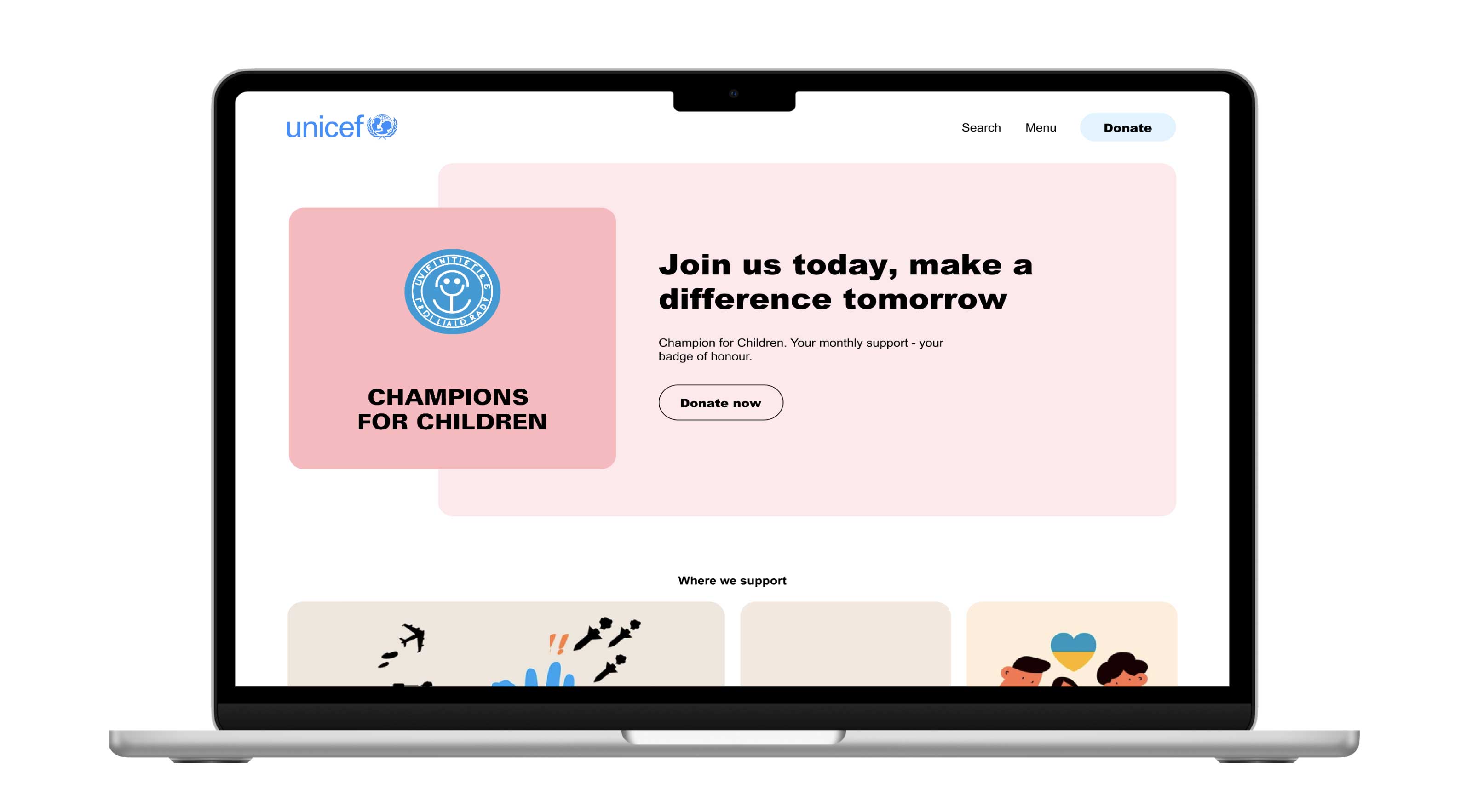
Client
Research conducted with real client as part of
Services
Research
Unicef SE
Research conducted with real client as part of
Hyper Island MA
Services
Research
Strategy
The Challenge
How do you get small and medium-sized businesses to donate to UNICEF - not once, but consistently, and with genuine commitment?
Our team of five worked with UNICEF Sweden to develop a human-centred strategy for increasing donation frequency and long-term corporate engagement among SMEs. The existing approach wasn't building lasting relationships. We were asked to find out why, and what would work instead.
Research Approach
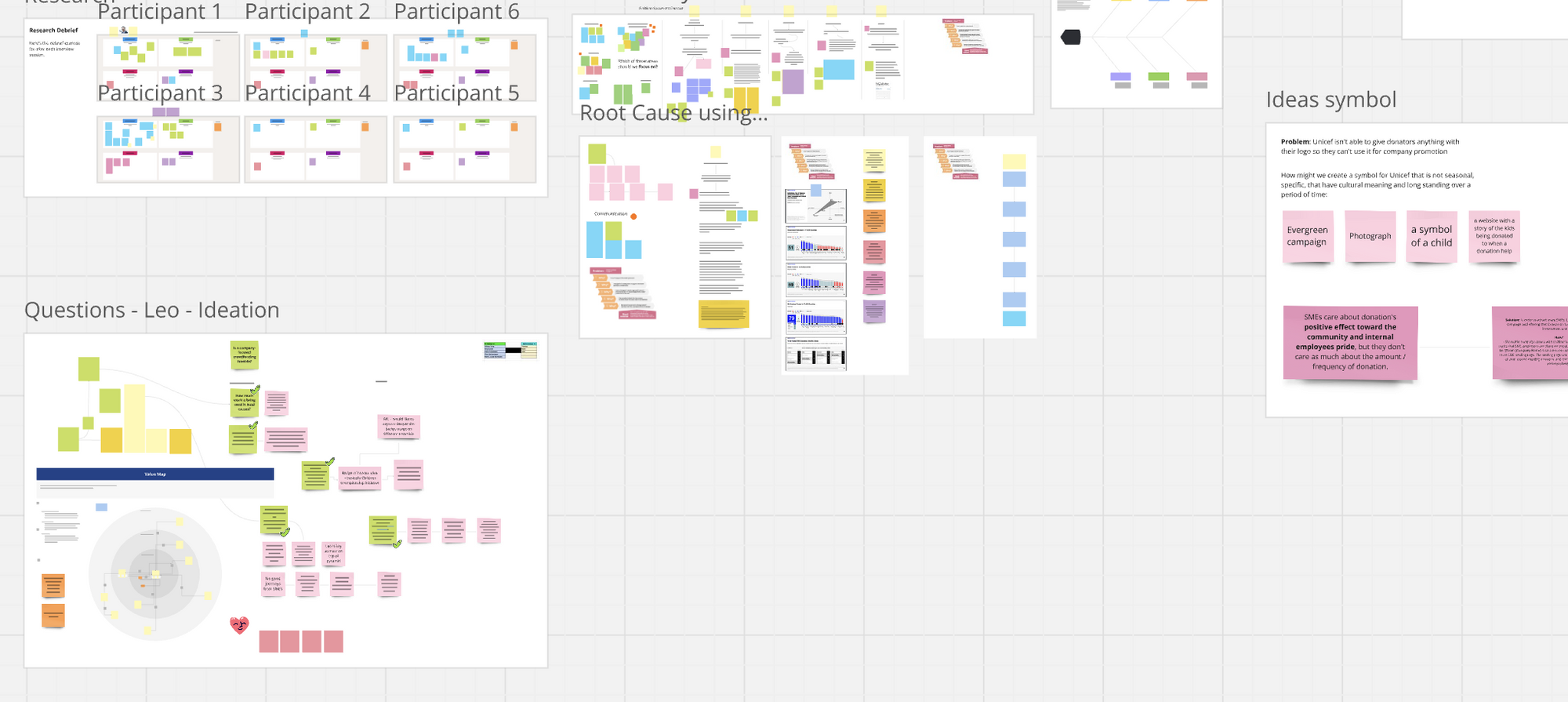
We started by mapping the full stakeholder ecosystem, understanding the relationships, motivations and friction points between SMEs, UNICEF Sweden, employees, and the broader donation landscape.
For data collection we ran a survey, conducted desk research, and interviewed three SMEs alongside a former business owner with direct experience facilitating corporate-charity partnerships. Early in the process we made a deliberate decision to abandon AI-generated personas -they flattened the human complexity we were finding in real conversations. The interviews gave us something more useful: genuine insight into how SME decision-makers think about charitable commitment, what motivates them beyond tax incentives, and what makes a corporate donation programme feel meaningful rather than transactional.
Key finding
SMEs care about the positive effect on their community and their employees' pride - not primarily about the donation amount or frequency.

Framework in use

Stakeholder Map


Ideation & Concept
Using the Double Diamond framework, we moved from insight to ideation through Crazy 8s and impact matrices, prioritising quick wins alongside longer-term structural solutions.
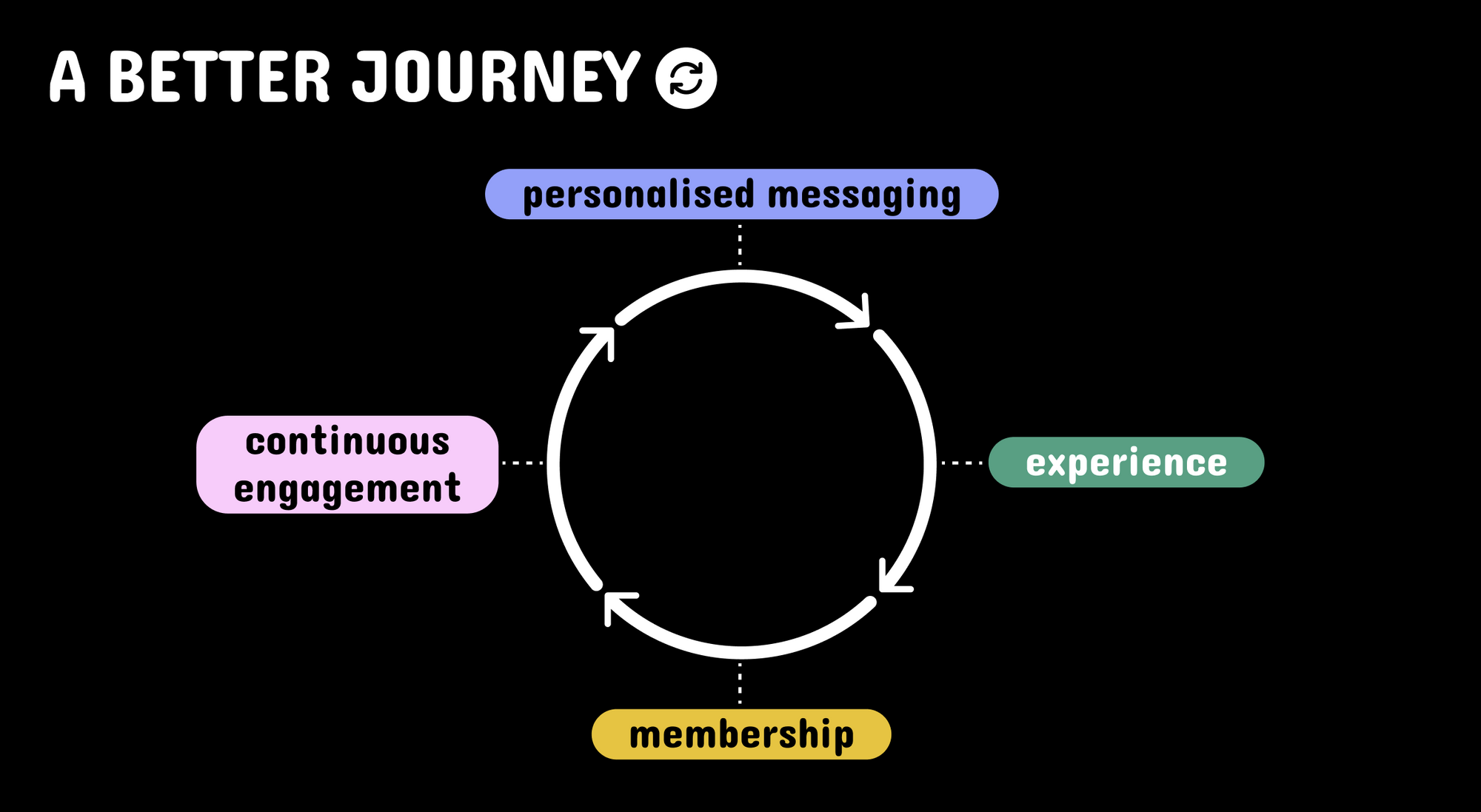
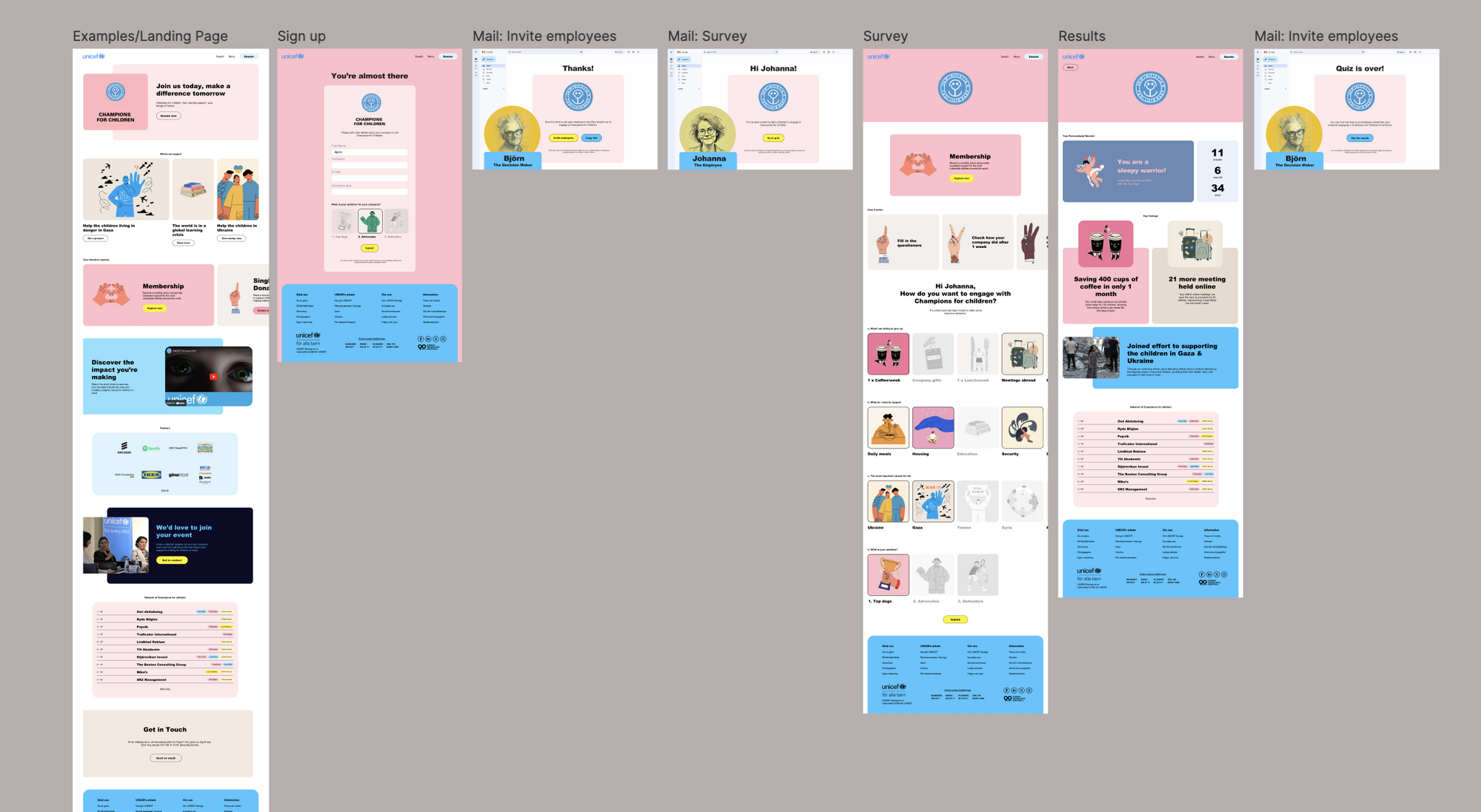
Our recommendation was a tiered membership model: Defenders, Advocates and Top Dogs, giving SMEs a way to publicly demonstrate their commitment to social good at a level that matched their capacity. Employees participated in an onboarding quiz to determine their company's tier based on collective commitment. Benefits scaled across tiers: digital badges, media kits, events, business impact reports, and dedicated UNICEF partnership support.
The model reframed donation from a transaction into an ongoing relationship - one that gave SMEs something to be proud of, not just something to report on.

Outcome
The membership concept and prototype were delivered to UNICEF Sweden as the core strategic recommendation. The prototype was not user-tested with SMEs before submission, a limitation we acknowledged, and one that would be the clear next step in a real implementation.
Research conducted with UNICEF Sweden as a live client partner as part of an MA in Digital Management at Hyper Island.